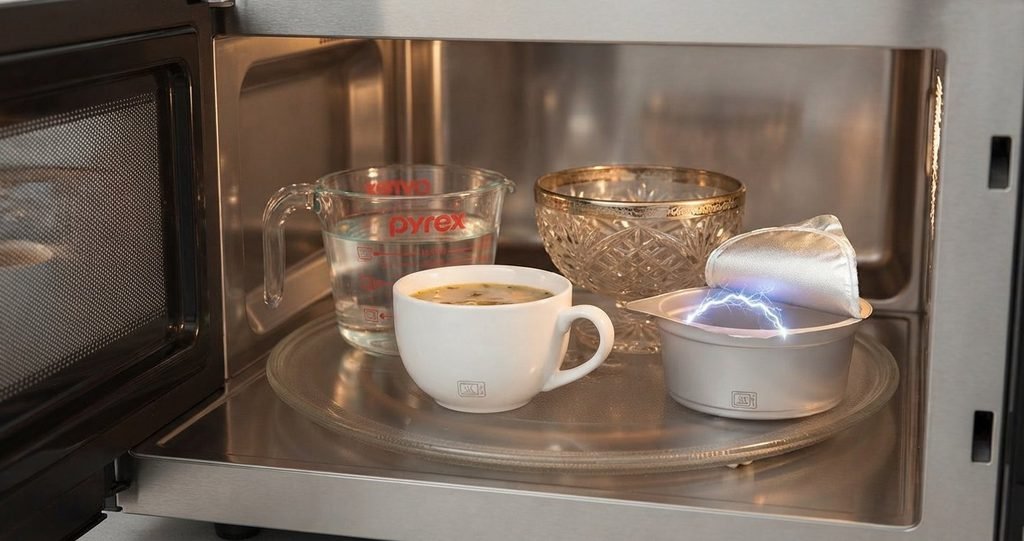
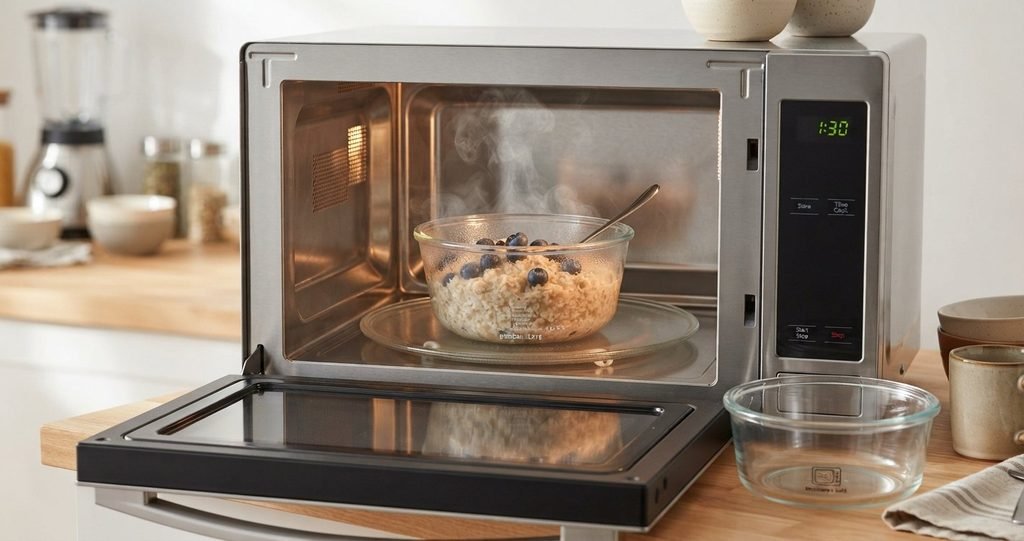
Yes, you can put glass in the microwave, but only if it’s labeled microwave-safe and in good condition. Tempered, cooking-grade glass such as Pyrex-style dishes and labeled storage containers is generally fine. Avoid glass with metallic trim or paint, chipped or cracked glass, decorative or unlabeled pieces, and any glass that’s cold from the fridge or freezer, because sudden temperature changes can make it crack.
Read More: https://kitchenchads.com/change-time-on-a-microwave/
When Is Glass Safe in the Microwave?
Glass is safe when it’s made to handle heat and carries a clear microwave-safe marking. Tasting Table says tempered glass containers designed for cooking, like Pyrex and similar brands, are generally safe when labeled microwave-safe. Liberty HomeGuard lists borosilicate glass such as Pyrex and Anchor Hocking, tempered glass cookware, and labeled microwave-safe storage containers as safe, and says the key is the “microwave-safe” label on the bottom of the dish.
Check the label first. If there’s no marking, treat the dish as unknown and use the water test below.
Which Glass Is Safe and Which Isn’t?
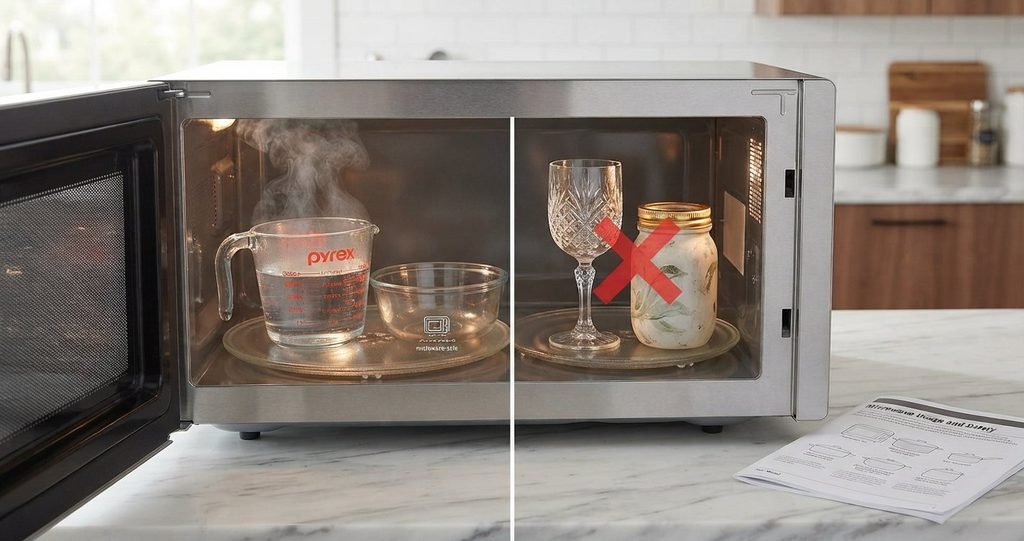
| Type of glass | Safe in the microwave? | Why |
| Labeled microwave-safe glass storage containers | Yes | Made and tested for microwave use |
| Tempered or borosilicate cookware (Pyrex-style) | Generally yes, if labeled | Built to resist heat |
| Everyday drinking glasses | Only if labeled microwave-safe | Thin or unlabeled glass may not handle heat |
| Decorative dishes | No | Not made for heating |
| Vintage Pyrex | No, per one source | Older pieces may not meet current guidance |
| Glass with metallic paint, gold rims or metal trim | No | Metal can spark and damage the microwave |
| Chipped, cracked, cloudy or etched glass | No (or use with great caution) | Damage weakens the glass |
| Glass straight from the fridge or freezer | Not directly | Sudden temperature change can crack it |
What this means: the label and the condition of the glass matter more than the brand name. If you’re unsure, don’t microwave it.
The Main Risk: Thermal Shock
Thermal shock is the main hazard. Tasting Table describes it as the sudden change in temperature that can cause glass to crack or even shatter. This is why you shouldn’t move a glass dish from the refrigerator or freezer straight into a hot microwave. Let it come to room temperature first, as Liberty HomeGuard also advises.
Pyrex-style glass handles heat better than ordinary glass, but it isn’t immune. A separate Tasting Table piece on Pyrex in the microwave says Pyrex is made for heating and is not dangerous in a microwave, but it also says the dish should be at room temperature first. Glass composition differs by brand, era, and region, so follow the label and instructions that came with your dish.
How to Test Whether a Glass Dish Is Microwave-Safe
If a dish has no label, you can run a quick check:
- Fill the container about halfway with water.
- Microwave it on high for one minute.
- Carefully touch the glass.
If the glass stays cool while the water heats, it’s likely safe. If the glass itself gets hot, don’t use it in the microwave. This test is a rough guide, not a guarantee, so skip it for any glass that is chipped, cracked, or has metallic trim.
How to Microwave Glass Safely
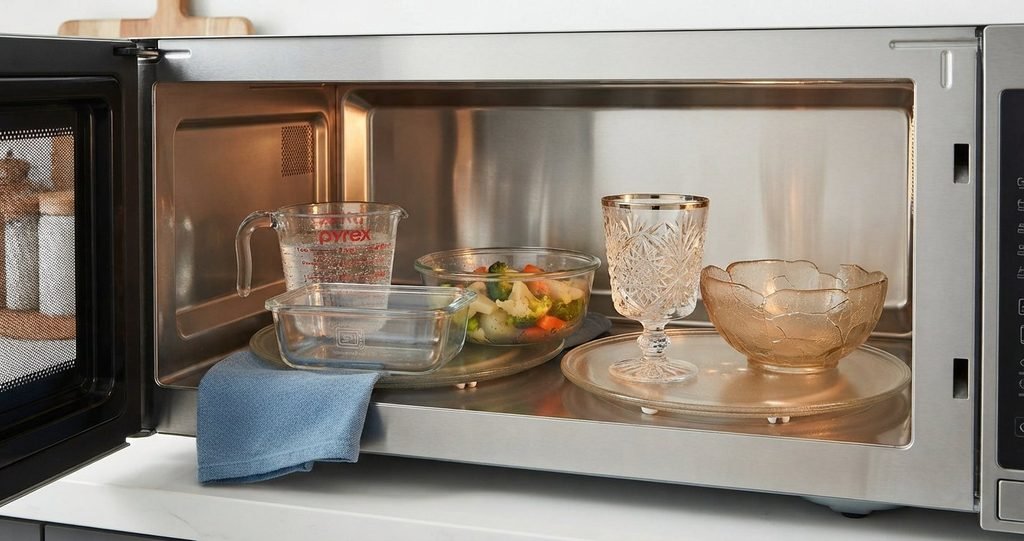
- Use room-temperature glass. Let chilled containers sit out first.
- Vent the lid. Tightly sealed lids can build pressure and crack the glass. Leave the lid slanted, open a corner, or drape a paper towel over the top.
- Heat in short intervals. Liberty HomeGuard suggests 1 to 2 minute bursts, stirring between them, since microwaves heat unevenly.
- Don’t heat an empty glass dish.
- Inspect before use. Check for chips, cracks, or bubbles, since damaged glass can fail even if it’s heat-resistant.
- Use oven mitts. Glass can get hot, and steam can burn when you lift the lid.
What to Avoid
| Avoid | Reason |
| Metal trim, gold or silver rims, metallic logos | Can spark and damage the microwave |
| Glass with chips or cracks | Weakened structure can shatter |
| Cold or frozen glass going into a hot microwave | Thermal shock |
| Sealed, airtight lids | Pressure can crack the glass |
| Unlabeled or decorative glass | Not tested for heating |
| Heating an empty dish | Glass can overheat |
Glass Items People Ask About
| Item | Short answer |
| Pyrex | Generally yes, at room temperature, with a vented lid. Don’t use damaged pieces. |
| Glass food containers with plastic lids | The glass base is usually fine if labeled; check the lid label and vent it. |
| Drinking glass | Only if labeled microwave-safe. Avoid decorated or thin glass. |
| Glass with a metal rim | No. |
| Mason jar | Not covered by the sources we reviewed, so check the jar’s label or maker. |
Frequently Asked Questions
Can you put glass in the microwave?
Yes, if it’s labeled microwave-safe and undamaged. Tempered, cooking-grade glass is generally fine.
What kind of glass is microwave-safe?
Borosilicate glass, tempered glass cookware, and containers labeled microwave-safe. The label on the bottom is the main thing to check.
Can you microwave Pyrex?
Generally yes, when it’s at room temperature and the lid is vented. Don’t use chipped or cracked pieces, and be careful with very old Pyrex.
Why does glass shatter in the microwave?
Usually thermal shock from a sudden temperature change, from pressure under a sealed lid, or from existing damage.
Can you microwave cold glass from the fridge?
It’s safer to let it reach room temperature first, because a cold dish going into a hot microwave can crack.
How do I know if my glass is microwave-safe?
Look for a microwave-safe symbol or wording on the bottom. If there isn’t one, try the water test above or avoid using it.
Can chipped glass go in the microwave?
It’s best not to. Damage weakens the glass and makes breakage more likely.
Conclusion
Glass can go in the microwave when it’s designed for it: look for a microwave-safe label, make sure the glass is undamaged, and avoid metallic trim. Let cold glass warm to room temperature, vent the lid, and heat in short bursts. If a dish is unlabeled, decorative, or chipped, play it safe and transfer your food to a microwave-safe container instead.